Why Danny Strong calls ‘Chess’ the ‘weirdest thing I’ve ever done’
The Emmy-winning writer was able to put his passion for musical theater into practice by writing an all-new book for the famously troubled show.
Why would someone take on the mammoth task of bringing back Chess to Broadway? Allow Emmy-winning scribe Danny Strong to explain.
“These songs are so incredible and there’s so many good ideas for a story here,” Strong tells Gold Derby of his thought process behind accepting the unenviable task of writing an all-new book for the 1988 musical. “If there was a way to bring some macro-clarity to it, I thought it could be a fantastic show.”
Chess originally debuted on Broadway in 1988 with a score from Benny Andersson and Björn Ulvaeus of ABBA fame, and lyrics from Tony winner Tim Rice, who penned the words for the classic tunes featured in Evita and The Lion King. Naturally, the score is full of bangers, with tracks like, One Night in Bangkok, and “I Know Him So Well” living outside Broadway as chart-topping singles.
But critics and audiences have long lamented that the Cold War-era story was convoluted, and that confusion to the shuttering of the original Broadway production after a mere 85 performances. Chess hasn’t been staged in full on Broadway since… until Strong had the idea to rework the script.
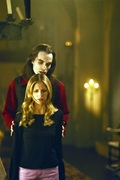
Strong has worked consistently in TV and film as an actor and a writer for many years. (Buffy the Vampire Slayer fans will remember him as Jonathan Levinson, a key character on that beloved ’90s series.) But this new challenge, which took roughly a decade, allowed him to explore his love of theater.
“There were a few ideas that came to me very quickly,” he divulges, “One was to have a narrator… [because] it could help solve a lot of story problems. And then I had this other idea to infuse some true-life Cold War plot lines, transforming the piece into a Cold War history play.”
Strong recruited Tony-winning director Michael Mayer to help steer the SS Chess and the revival opened on Broadway in November 2025 starring the trio of Nicholas Christopher, Lea Michele, and Aaran Tveit. Strong shares the challenges associated with bringing “clarity to the love story” at the heart of Chess, and looks ahead to opening his second Broadway musical, Galileo, in the fall.

Gold Derby: The first staging featuring your new book was performed at the Kennedy Center in 2017. How have those years since informed your writing?
Danny Strong: The Kennedy Center was so informative because it was so clear how well the Narrator character worked. I gave the role a very light wit, and we were getting huge laughs partly – or probably all – because of [actor] Bryce Pinkham. But we were stunned at how well it played. We thought that if we could juxtapose the heightened Cold War story with this sardonic wit that, at times, was taking the piss out of the show a little bit, it would take the pressure off the fact that it’s hard to believe this is all really happening. That felt that it could be a really dynamic and interesting tone to combine this sardonic with high stakes drama and these gorgeous love songs.
And because the music is so multidimensional – it goes from pop to pure opera to sort of a Russian dirge – [it needed to] have a book that did the same thing tonally. It was all in service of the music; it was never about me or my ideas. The whole point of the book is to set up a song so it could soar to its fullest potential.
The book of any musical is structured so that it’s always setting up a song. How did that affect your writing process?
I’m a huge musical theater fan, so that was my secret weapon. And you know what? I’d already written Galileo before I did Chess, so I’d been through the process already. And thank goodness, because Chess is the weirdest thing I’ve ever done! In some ways it’s like a jukebox musical, but you’ve also got story in the lyrics, and you need to be true to that story. So it was about coming up with book scenes that are new, as well as servicing a macro story that could lead you into these songs. You could re-order the songs a little bit, but with a jukebox musical, if a song doesn’t work you can just chuck it and throw in another one. This was just a jukebox musical, but with handcuffs on.
We see more internal conflict within Lea Michele’s Florence in your script, and the character of Svetlana, played by Hannah Cruz, acts as a sort of mirror image of her instead of a mere villain. How did you flesh the female characters out?
I felt that all four of the lead characters could use a little more deepening and a little more polish. Florence felt like she could really be the central character of the show; she’s got so many iconic songs, and it’s such an interesting setup for a character. She’s the best chess strategist in the world, and she’s got a mysteriously tragic past. I just thought, “How can we take it to another level? How can we feel her internal struggle? How can we bring more clarity to the relationships?” We wanted to give Florence her own agency, her own goal, and her own desires.
It was the same thing with Svetlana. There was already a great setup for her – the wife who has been abandoned by her husband, which puts her in great danger. How can you dig deeper into that? I thought we could get very emotionally attached to her – but by rooting for her, we’re also rooting against Florence. So it becomes complicated in a way that I thought could be very good drama. And Hannah is incredible in the show.
Many of us first saw you on our screens in Buffy the Vampire Slayer. Sarah Michelle Gellar is a Chess superfan and posted your lovely reunion on Instagram when she came to see the revival. What did it mean to have her there?
It was everything. I love Sarah so much, and she was so incredible to me when I was on Buffy. When I started the show, I only had a couple of lines an episode for two seasons. I was a guy that just showed up with a few lines and she still treated me like a prince, even though she was the star of the show. So I’ve always felt so relaxed around her, and so grateful to her. Over the years, she’s been such a supporter and such a wonderful friend. When I told her I was going to rewrite Chess… she just couldn’t believe it. It blew her mind! The fact that it was her old pal from Buffy all these years later meant a lot to her and it meant a lot to me.
Director Michael Mayer was attached early on in the process. He’s helped shape so many famous musicals – how did his work influence your own?
I was so lucky to this show with Michael; he was the first person I asked to do it. He’s just a genius at this, and he was the guide. It was a wonderful collaboration. We’re doing it again on Galileo, which starts previews in November. But particularly with this show, to have this true master of the medium supervising me was like having a great book editor.
Galileo stars Raul Esparza as the famed Italian astronomer, and has also had a long journey to Broadway. How does the process of creating a new musical compare to reworking a pre-existing show like Chess?
In the case of Galileo, the huge difference is that it’s an original score. The songs are all new, so we’re constantly rewriting the songs, throwing away songs, and writing new songs. Not me, but the songwriters! Although I’m very much a part of the process of coming up with the concepts of the songs, and what the story needs. Chess has the huge challenge of fitting the story into songs that already exist. So there’s different challenges, but at the end of the day you’re putting a musical together, so there’s a commonality.
This interview has been edited and condensed.