
Anthony Head on punching up ‘The Canterville Ghost’ with special effects and Shakespeare
For the final episode of The Canterville Ghost on BYUtv, we’ve got more from Anthony Head as he talks about the special effects of Sir Simon, as well as re-writing his character’s Shakespearean style with the show’s blessing, and what attracted him to the project in the first place.
The Canterville Ghost concludes tonight with episode 4. Stars James Lance and Anthony Head, who also both appear in Apple’s smash it Ted Lasso, were very generous with their time when promoting the show and provided enough content to run a new piece each week for the whole mini-series. We featired James Lance for episode 1, then Anthony Head for week 2. Last week, we had more from James, delving deep into feelings about the great Oscar Wilde, as well as a few more Ted Lasso Trent Crim tidbits.
For the finale, we’re bringing you the rest of our chat with Anthony Head, who plays Simon de Canterville, oru loveable resident ghost.
The Canterville Ghost episode 4, “Winter,” airs Sunday 21 November. As Virginia crosses over to fight for Sir Simon’s right to rest, the truth about the three families – the American Otises, the aristocratic Cantervilles, and the Romani Lovells – finally unravels. Ginny’s legan skills are put to the test as she acts as barrister in a ghostly court, and is able to call on witnesses of the past. Back in reality, the secrets of the building’s layout come into play, and the Otises look for a way to recover their fortune and stay at Canterville. Also James Lance hides behind a pillow and it’s an excellent time.
This new four-part adaptation of The Canterville Ghost is set in the present day. Written by Jude Tindall and directed by Paul Gibson and Suri Krishnamma, The Canterville Ghost was commissioned by BYUtv for United States broadcast, and produced by the BBC. It will be made available for US viewers to stream for free on BYUtv, after the episodes air.
The second part of our interview with Anthony Head unpacks some of the various levels of special effects available on various budgets throughout his career, like Buffy and Merlin – and more importantly, what makes them work or not work. He also shares what it was like to shoot with his talking rat Cesspit, and why he loves the crux of Sir Simon and Ginny’s story – the court case in Simon’s defence, and how writer Jude Tidall transformed Virginia from an ingénue into a defense layer. Head also makes a connection between the passion at play on set for Ted Lasso and his request to be involved with Sir Simon’s over-the-top Shakespearian type dialogue, and has lots of nice things to say about his young co-stars!
You shot Sir Simon in person – you weren’t on a green screen, the effects were added in post, and to call a spade a spade, with BBC series, their family-viewing shows don’t always have a massive budge and there’s a level of special effects in shows like Doctor Who that we just accept as part of it, as the programming itself is so good. You actually have this experience with Merlin, which is one of the top shows i the world that can make me cry. I used to cry every single episode of Merlin without fail. And it was one of those lower production value shows.
I think Merlin had a fandom in the States as well, but I’ve always been curious because in Australia we get a lot of programming from the UK and out version of the BBC, national public broadcaster, is at a similar level. American TV is always a bit shinier and I’m wondering if you could shed a light in yoru many experiences with different properties, what is it about the way that say, a typical BBC show which maybe isn’t as glossy as an American show, manages to land these things so impactfully in like a production that is not as “good quality,” visually, as say, what an American audience thinks is the standard.
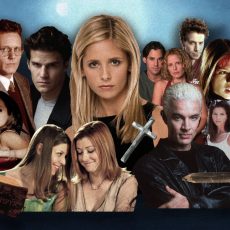
It’s principally about money, it’s about how much they have for effects. I remember when I was doing Buffy, if there wasn’t a budget for too many dustings of vampires, occasionally we would dust a vampire of camera and you just have like a puff, somebody would actually blow dust physically.
I’ve never gone back to specifically look for that kind of poor man’s process stuff for Buffy, but I’m assuming because there were a lot of practical effects, physical costumes and stuff.
But a lot of it for the time, for the Ninties, was still remarkable. And I remember going to see what they were doing with the effects on Merlin. I went to visit where they did it, and it was just quite remarkable too, watching the stuff. I remember when, towards the end of the fourth season, they bought this program which helped to create an army, which I found absolutely fascinating because there were suddenly big armies.
They had to pay money out but then were able to sort of create this scope, but the only thing was, somebody told me at the time, that occasionally it has a mind of its own and occasionally you just get some of the soldiers at the back just wandering off doing their own thing. It was bizarre, absolutely bizarre. But with this, you never know what it’s going to be. I had full-on makeup ad it was a two and a half hour, three-hour process every day, and also, when they said that they were doing an animated Cesspit, my rat, I was like, “Okay -” You know, I wonder if he’s just going to be like a cartoony thing – how are they going to do it? I’m wonderfully impressed with the rat.
It does look good, and I mean there were things in Merlin like the dragon that looked like top of the class to me but obviously it’s just that compared to cotemporary things, you know like Netflix money or your Amazon Prime money, I think it really says something that these BBC level productions are still really immersive and impactful to people as stories, even like you know, the classic Doctor Who kind of stuff.
Well, I think that’s the point. At times, sometimes one kind of feels that the script has just gone, okay, you can spend lots of money on mucking about and on a few occasions I sort of thought “Well it’s a bit, you know…” and then you go down a route and you do a show and ultimately it’s not as good as it could be.
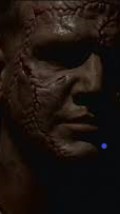
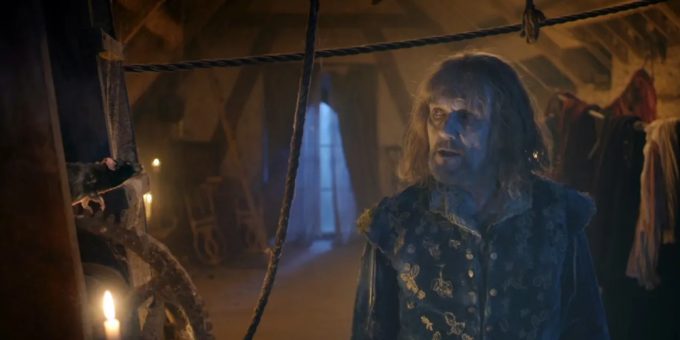
And then you do a show like this, and you can only hope. You can only give it your best and hope that it comes out well, and that they are – as in this case – that they are being very specific where they spend their money on effects, because it’s not going to be a massive budget. So consequently I find it dead impressive, because the effects are really remarkable. I love the look of Sir Simon, because it’s not oogy boogy but there’s enough tomake you go “he looks a bit… not a happy soul.”
And as I say, Cesspit I find, I mean what you even can see is basically when I played, and played a lot of scenes with Cesspit. Jonty Stephens, who did the voice, he would hide in the corner, bless him, they would bring him to voice it. So he was there, because sometimes you just have one of the ADs reading and it’s a bit lacking. So I had him to speak to and a stuffed rat on a stick and they’d say alright, look at that. So when the stuffed rat moved, you’d work out where he was going. The fun of something like this is when you finish it and you seet it and you’re actually, you’re knocked out by it, you are actually wowed.
What attracted you to The Canterville Ghost? Had you worked with the write [Jude Tindall] before?
No, I hadn’t worked with Jude before. First of all, when there’s a part that’s been done by some wonderful actors – Charles Naughton, Sir John Gielgud, Pat Stewart – I hope you don’t mind me calling him Pat. He is Sir Pat Stewart – I hope you don’t mind me calling him Pat. He is Sir Patrick Stewart but I am actually an old friend. He played my father in a Peter Shaffer play at the National Theater. And that was prior to Star Trek! – but when first offered something like that, you immediately go “Oh Ooooh!”
And then I read the script and thought “Oh, actually, this is interesting.” And I’ve watched previous takes on it before thinking “Um, yeah, it’s great up to a certain point,” and then this script actually takes it leaps and bounds beyond. What I mean, and something that none of them every do, is that it gets to a point when Sir Simon Canterville, the ghost, basically has to face his past, and this time Jude has actually done it.
Because normally, it’s just he goes off with the daughter and comes back and everything you know, is ah great, fixed. Now, Jude wrote it as a courtroom piece and it’s absolutely fabulous. A thing that I also loved about this is something which I don’t think really – I mean, there is definitely a transition in other versions and as you find out more about Simon you understand who he is and his sadness, but this actually develops him much more, because I start of ass this – she wrote me as a sort of amateur dramatics performer. He loves doings his roles, his different ghostly roles. That’s great fun to play, because there’s no limits. You could just say, yeah off you go and you just wait for somebody to say could you pull it back? No, no.
It was some of the funniest stuff that I’ve ever seen, just some of the enunciation even. It’s so ridiculous but in such a sharp way. I found it so funny to the point that I wasn’t necessarily expecting it in the last couple of episodes to go so deep, so I think that was an interesting kind of shining a light into the dark corners, of the why of everything, and combining that with the level of farce and satire and irony of his drama, of his little performances and all of that kind of stuff – I just thought that you must have had such a fun time and that the person who read the script and took it on had to have been like “I really want to play that,” like it can’t be someone who takes themselves too seriously.
I mean I loved working with the cast. I twas a lovely, warm rich cast. Laurel Waghorn, who plays Virginia, is a remarkable young actress, if you’ve seen the stuff at the end, I mean she’s remarkable. There’s some beautiful stuff in the courtroom, just extraordinary. And the kids, you know, the two sets of twins.
Yeah, I thought all four of those young teenagers were very natural, very good.
You never know how someone feels on set, but the two boys, Joe and Tom Graves – I didn’t so much work with Charlotte and Harriet Robinson – but Joe and Tom were just so open, just so willing to learn, loving to learn, loving the whole process and it’s lovely when you just feel that warmth coming off somebody just who’s having the best experience – they don’t want to leave set!
James said that you guys hadn’t really met via Ted Lasso, yet, when you started shooting this. But he did say that he saw you across a car park and got excited. he told me all about his first experience ever engaging with your work, in Chess, and he just had a lot of nice things to say. Do you have any idea if the two of you were cast in The Canterville Ghost against each other as the two lead male characters – was that coincidental, or how that ended up that way?
I think so. Totally incidental I think. Because at that point, Ted Lasso was definitely out there, but I mean, it hadn’t at that point won all the Emmys. It was definitely on people’s radar and people were saying how wonderful it was, and it was absolutely perfect for where we are brain-wise at the moment, but our casting, I think it was incidentally coincidental.
But it was lovely, because we would talk, he and I were talking, because we were both not sure where and how we were gonna find ourselves in the second season and there were a couple of days where he had to go back there. One of the things that I love about Ted Lasso is again, it’s one of those shows that has the initial premise, the initial thing of “Well it’s a joke!” An American football coach has been brought over to Europe and England and you’re like “meh, eh, okay” and they you read the script and you think “Oh actually, this is quite interesting,” and then on set it would just massively grow.
Because Jason Sudeikis he’d be – I mean the writing team were all, they’d be sitting in the green room writing bits and pieces then Jason would be getting sides down, new rewriters literally 10 minutes before doing the scene, because it’s so important to them, to them all. You can feel the drive, and I love that.
And when I finally got to meet Jude, one of the things that I thought, basically in the original script that I read, there were a few bits and pieces, a few thees and thous and I said, “Okay, I love Shakespeare, I actually wrote something years ago.” I wrote a stage play in which one character spoke Shakespearean and I think it’s, I don’t know, it just puts a character in a very specific place and I said “I think, if you don’t mind, I’ll run it by everybody but I’d love to have a go,” so I did paraphrase a lot of the most melodramatic scenes.
Oh, you kind of took it up a level, did you?
Well yes, just because, in my head, if he’s been in that place since 1570, the one thing that – apart from having a glow around him – the one thing that puts him in place is that you immediately think he’s not modern. There’s something very different about his speech and that stuff is, I don’t know, fun, just fun and the fact that they were just “Yeah sure carry on,” and that the opposite thing, when I’d say something and they said “Well that doesn’t quite make sense” “Okay, right.” It was lovely to have that openness, that ease. It’s just fun when you get to be creative on a project.
Maybe in Ted Lasso season 3 you and James will get to play together on screen again.
Who knows, that would be fun.
He was so fun in The Canterville Ghost, he’s a massive fan favorite.
He’s lovely, absolutely lovely, the family is really lovely, because in some of the versions, it’s not that you don’t quite believe the family, but it’s kind of, their place is a bit lightweight. That has got drive.
I think that the kindness element matters, like I think that in the original, in a tongue-in-cheek way, and maybe in the adaptions further on, it’s kind of played like the Americans wanting to help the ghost is stupid of them, or naive of them, whereas this does not do that. I actually found the family so charming and fount it ti be a sympathetic and really fun story.
You’ve mentioned the courtroom in episode 4 a couple of times, and I think it was so cool to change the story of Virginia being the one to help – in the book it’s just kind of founded on “Oh, she’s so innocent and good that her purity of heart will save the day,” and it’s like, okay, but what they ended up doing here, and actually making it engaging and righteous, was really cool in my opinion . I cried a but in the last episode.
I thought Jude did quite a remarkable job, you know, the fact that she does give Virginia this life-changing experience that draws her into the last act, makes her terrified of it and it’s something huge and at the same time, the interaction of the three families, the reveal of how actually the whole thing is interconnect – I think t’s fascinating, and none of that was in Oscar Wilde.
It takes a brave person to expand on something like that and it was quite thoughtfully done and I think it will be like a good family viewing experience, which is cool. What do you hope that people take away from The Centerville Ghost from watching it and I guess the messaging and the story and the time to be had?
I think there’s a wonderful warmth about it. It is warm and it’s also a family show, but it’s not twee, it’s something that you can actually, you know, the adults will be drawn into as much as their younguns, it’s not something that they’re just watching for the sake of it. I think it’s got a very wide parameter and that it’s really good, it’s a great piece of writing.
‘The Canterville Ghost’ airs Sundays until 21 November and is available to stream free on BYUtv
Original article at Subjectify Media